Hull safety
Scupper cart safety
Scupper holes are moulded drains, not designed load points. What manufacturers actually say about cart damage, the warning signs before a hull cracks, and when to refuse a scupper cart outright.
Scupper carts are quick, cheap and convenient, and on the right boat they are perfectly sensible. On the wrong boat they are the one accessory in this entire category that can put a permanent crack in your hull — and the manufacturer will not pay for it.
What a scupper hole actually is
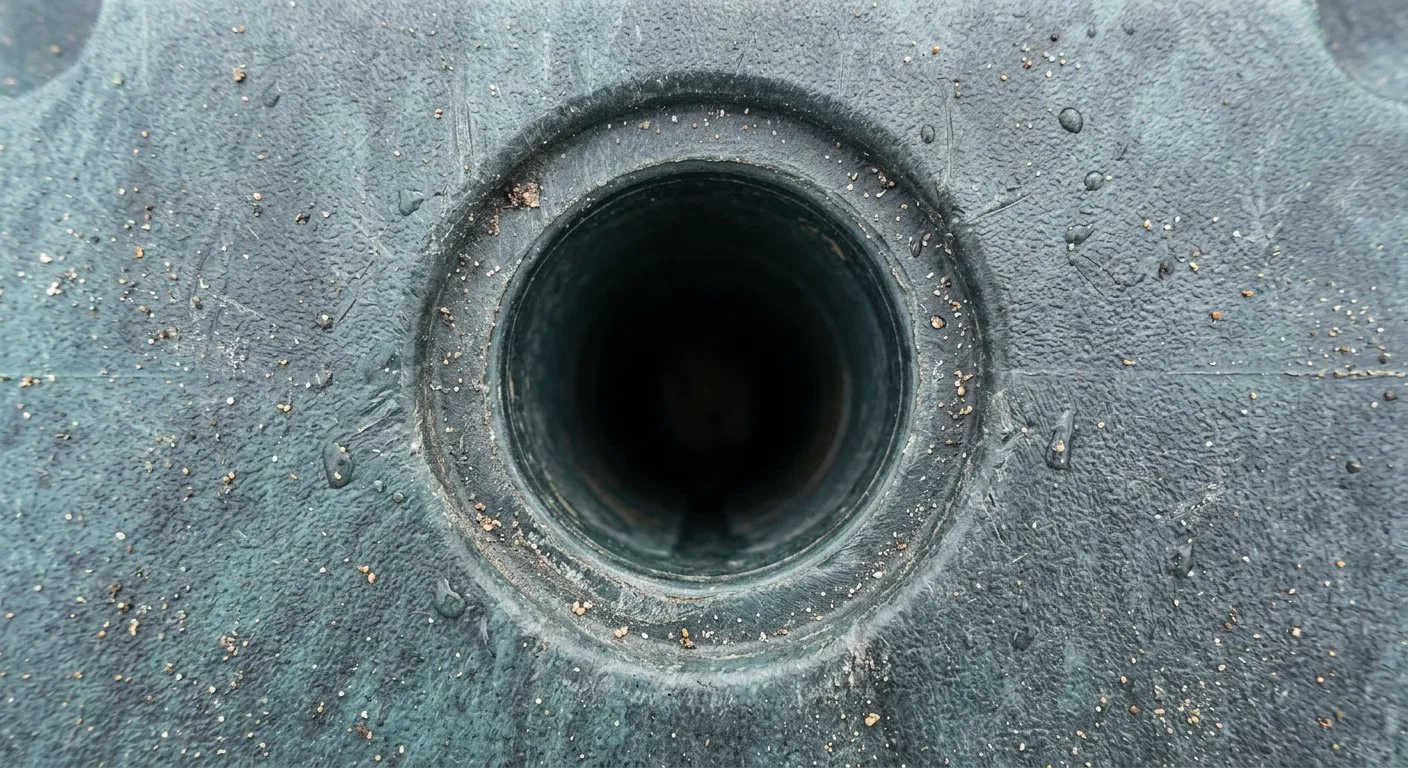
A scupper is a moulded drain: a tube running from the deck through to the bottom of the hull so water that comes aboard a sit-on-top can run out. Its design job is to let water through. That is all.
Some manufacturers reinforce specific scuppers for cart use, and design carts around them. Many do not. From the outside these look identical. Nothing about the appearance of a scupper hole tells you whether it can carry the entire loaded weight of your boat.
The assumption that breaks hulls
Never assume a scupper hole is structural. If the manufacturer has not said it is designed for a cart, treat it as a drain. Our compatibility engine treats unknown scupper structure as a warning, not as permission — an unknown is never the same as a yes.
What manufacturers actually say
This is not a theoretical risk that we have inflated. Hobie’s own forums contain repeated, consistent statements from the company and its dealers that damage to scuppers caused by carts is not a warranty matter. The usual outcome for a badly cracked hull is replacement, at the owner’s expense.
Kayak builders make the same point more bluntly elsewhere in the industry: the damage pattern from a scupper cart — radiating stress cracks and deformation around the hole — is immediately recognisable to anyone who works on these boats. It is identified as user-caused, not as a manufacturing defect, and it is not covered.
There is a second, telling piece of evidence. Hobie developed a dedicated dolly for their larger boats precisely because plug-in scupper carts are too limited for them. When a manufacturer builds a different product rather than recommending the plug-in cart, that is the clearest answer you are going to get.
How the damage actually happens
The failure is rarely sudden. It develops like this:
- The posts are not fully inserted. This is the single most common root cause. The post tips end up wedged inside the scupper tube instead of the cart’s crossbar taking the load.
- Load concentrates on the scupper walls. Instead of the hull resting on the cart, the scupper tube is being pushed outward from inside by the post — a spreading force the moulding was never designed for.
- The area around the scupper begins to bulge. Polyethylene creeps under sustained load, particularly in heat. This stage is visible and reversible if you stop.
- Stress cracks radiate from the hole. Now it leaks, and it is structural.
Heat accelerates all of this dramatically. A loaded boat sitting on scupper posts on a hot day is the worst case — which is exactly what people do when they leave the boat on the cart at the launch.
Warning signs to check for
- Bulging or doming around the scupper on the hull bottom. This precedes cracking.
- An oval scupper that used to be round.
- Whitening or stress marks in the polyethylene around the hole.
- Posts that have become hard to insert or remove — the tube has deformed around them.
- Any weeping or damp inside the hull near a scupper after transport.
If you see bulging, stop using the scupper cart on that boat. The bulge is the warning; the crack is the consequence.
If you are going to use one, these are the rules
- Confirm the manufacturer supports it. Not the cart maker — your kayak maker. The cart maker does not carry the risk.
- Insert the posts fully, with the collars seated. The crossbar must carry the load. If the collar is not down, the scupper is carrying it. This is the whole ballgame.
- Use the correct post diameter. A post that has to be forced into a scupper is pre-loading the tube before you have even lifted the boat.
- Fit a keeper pin. Hobie sell one for exactly this reason: it stops posts bouncing out over rough ground, which is both a dropped-boat risk and a shock-load risk.
- Use the scuppers the manufacturer nominates, not whichever pair is conveniently spaced.
- Reduce the load. Take the battery, the crate and the cooler out and carry them separately. Everything you remove comes off the scupper walls.
- Never store a loaded boat on scupper posts. Transport only, then get it off. Sustained load plus heat is what causes creep.
- Inspect the scuppers regularly. Every few trips, look underneath.
When to refuse a scupper cart outright
We treat these as hard stops in our compatibility engine, not as cautions:
- The kayak manufacturer advises against it. No further analysis needed. We will not recommend a scupper cart against explicit manufacturer guidance, whatever the cart maker claims.
- Heavy pedal kayaks. A 65 kg rigged boat plus gear concentrated on two moulded drains is a bad idea even where it technically fits.
- Oversized posts. If it does not slide in easily, it is wrong.
- Rough ground or long distances. Every bump is a shock load through the scupper walls.
- Unknown scupper structure on a heavy boat. Unknown plus heavy is not a gamble worth taking against the cost of a hull.
The better option, most of the time
A platform or bunk cart spreads the load across a broad area of hull that is designed to be supported — because that is how the boat sits on the ground, on a rack and in the water. There is no concentrated point load anywhere.
They cost a little more, take slightly longer to set up, and require you to position them correctly. In exchange, the worst realistic outcome of getting it wrong is that the boat is annoying to push, rather than that it needs replacing.
For heavy fishing and pedal kayaks specifically, this is not a close call. Browse platform and bunk carts or run your boat through the finder.
Our policy for each boat in the database
Based on manufacturer guidance where it exists, and on hull weight and construction where it does not.
Platform or bunk cart only
At 65.5 kg rigged before any gear, this boat is too heavy and too wide to sit on scupper posts. Use a wide-stance bunk or platform cart.
Hobie Mirage Pro Angler 14 360XR
Platform or bunk cart only
The heaviest boat in this database at 67.4 kg rigged. Wide-stance platform cart only.
Platform preferred
At 46.7 kg rigged this is on the boundary. A platform or bunk cart is the safer choice; if you use a scupper cart, full post insertion and a keeper pin are not optional.
Platform or bunk cart only
Pontoon hull at 48.5 kg assembled. A wide-stance bunk or platform cart that can bear on both sponsons is the correct approach.
Old Town Sportsman BigWater PDL 132
Platform or bunk cart only
At 62.6 kg rigged and 4 m long, this needs a high-capacity wide-stance platform cart.
Either, with care
Light enough that a well-fitted cart of most types will work. Strap-over platform carts are the low-risk default.
Either, with care
Moderate weight and a forgiving hull. Most cart types work; a bunk cart handles the shallow-V better than flat pads.
Either, with care
Insufficient data to be prescriptive. Measure your hull and weigh your boat.
No manufacturer publishes scupper dimensions
We attempted to source scupper diameter and spacing for every boat in our database and found none of it published by any manufacturer. Every scupper measurement on this site is therefore recorded as not published, and we will not estimate one. If you need to know whether a specific post fits a specific scupper, measure your own boat.
Check this against your own boat
General advice only gets you so far. The finder runs your kayak, your loaded weight and your launch terrain against every cart we hold.
Other guides
Start here
How to choose a kayak cart
The full decision process: rigged weight first, then hull shape, then terrain, then storage.
Technique
Strapping a kayak to a cart properly
Strap slip is the second most common cart complaint and it is almost always fixable.
Terrain
Moving a kayak across soft sand
The surface that defeats most carts.
Ownership
Saltwater cart care
Salt and sand destroy carts faster than use does.